
Narrative and Character Development:
“Like a Dragon: Pirate Yakuza in Hawaii” introduces players to Goro Majima. He is a well loved character from the Yakuza series. Now, he appears as an amnesiac pirate captain. This setting offers a fresh narrative within the established universe. It also integrates the humor and depth of character development for which the series is known. The game’s story takes Majima on a journey through the islands of Hawaii. It mixes the traditional Yakuza drama with pirate antics. This offers players both familiar and novel experiences. In contrast, “Skull and Bones” focuses on creating a pirate fantasy. Yet, it lacks the narrative depth and character connection that “Pirate Yakuza in Hawaii” provides. Many reviews point out its story as forgettable or generic.
Here is my own reaction to the new amazing trailer.
Gameplay Mechanics:
“Pirate Yakuza in Hawaii” brings back the real-time combat that fans appreciate from the earlier Yakuza games. It introduces new pirate-themed combat styles like Mad Dog and Sea Dog. This gameplay offers dynamic combat scenarios on land and at sea. It includes ship customization and crew management. There are even humorous elements like energy cannons and shark cannons. The naval combat in “Pirate Yakuza in Hawaii” resembles the mechanics of “Assassin’s Creed IV: Black Flag.” Many players favorably compare these naval mechanics. Players find this naval combat engaging and dynamic. It includes the added twist of the Yakuza series’ signature style. On the other hand, “Skull and Bones” got criticized for its repetitive and less engaging naval combat. It was mainly negative for not allowing ship boarding. “Pirate Yakuza in Hawaii” includes this feature, enhancing engagement and variety in gameplay.
Value and Pricing:
The pricing strategy of “Like a Dragon: Pirate Yakuza in Hawaii” at $60 resonates well with its content offering. This is especially true when considering the additional features like New Game Plus mode, which is available for free post-launch. This was a point of contention with the previous game in the series. “Skull and Bones,” at $70, has faced backlash. Critics perceive a lack of content and depth for the price. Many describe it as a bare-bones live-service game. It falls short of expectations set by its “quadruple-A” branding. Ubisoft’s CEO used the term “quadruple-A” to justify its high price. However, many reviewers and players argue that the game doesn’t deliver on this promise. This is especially apparent when compared to “Pirate Yakuza in Hawaii” in terms of innovation, fun, and player engagement.
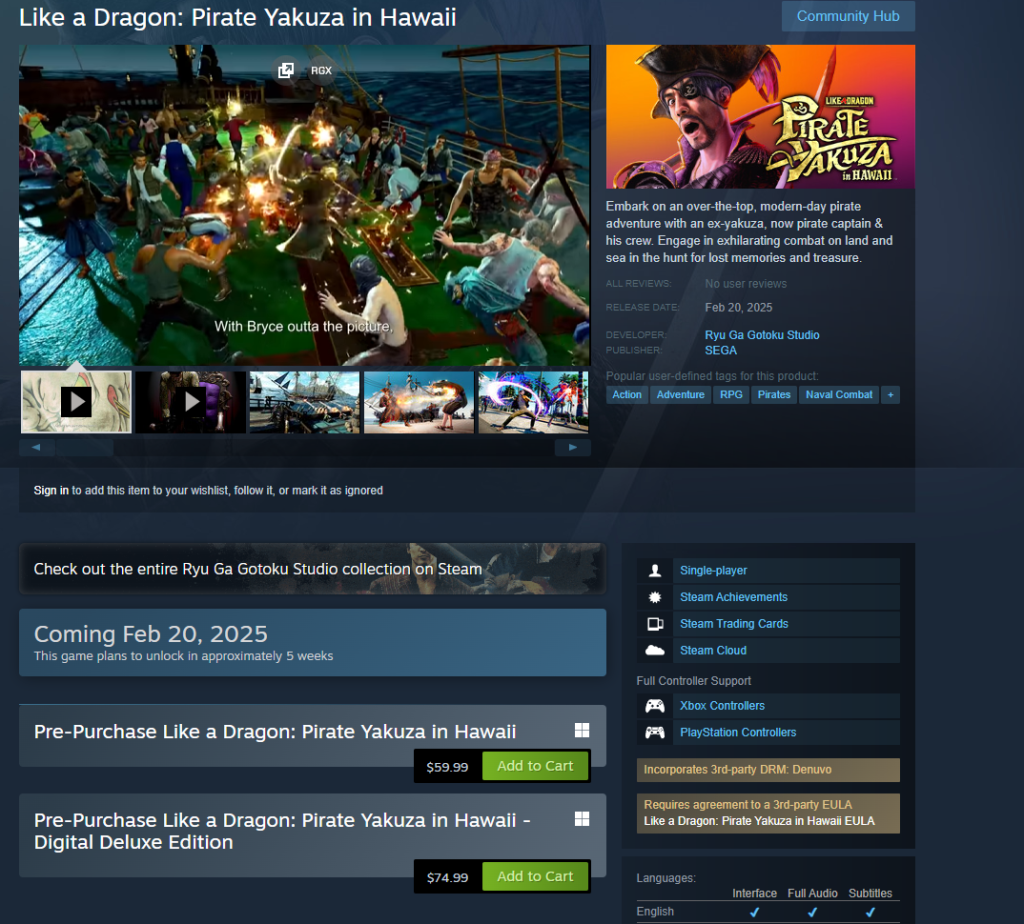
Community and Reception:
The hype around “Pirate Yakuza in Hawaii” is overwhelmingly positive. Fans of Assassin’s Creed Black Flag are excited. They finally see a great adventurous pirate game made from a Yakuza series. Social media posts and forums express happiness. Comparisons often favor “Pirate Yakuza in Hawaii” for its creativity. They also commend its execution. “Skull and Bones,” has been in development for a long time. Yet, it has not managed to capture the same level of enthusiasm. It also received less positive reception. Many feel it missed the mark on delivering a compelling pirate game experience.

“Like a Dragon: Pirate Yakuza in Hawaii” delivers a more interesting and engaging story. It offers better value for money than “Skull and Bones.” This is despite “Skull and Bones” having a higher price tag and ambitious branding. This comparison highlights how creativity, character depth, and gameplay innovation can lead to a game that resonates more with players. This happens even without the same AAA or “quadruple-A” label.
 Aizen Arcade
Leave a comment